Allegations
The criminal and civil allegations he makes against the companies, agencies and outlets named across this site, in one place: the entity, its sector, the allegation, the statute invoked, and the page where the record sits. They are his, made under his own name, and each rests on a dated record — the carriers' breaches, the subpoenas, the Files, the block, the keyboard that flagged a correctly spelled word on September 24.
Exhibit: September 24, 2026
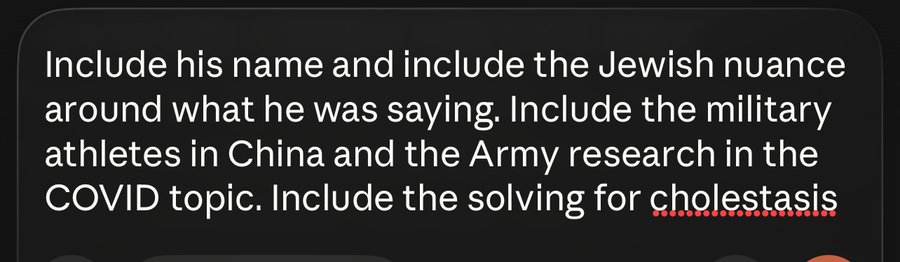
His phone, writing the instruction for this page: the word is spelled correctly and the sentence has no error, and Apple's keyboard flags it. He records interventions of this kind — flags, autocorrections, dropped saves, scrubbed drafts — as disruption techniques applied to his work for half a decade, and this is the exhibit he chose.
By sector
| Entity | Allegation | Statute he invokes | Record |
|---|---|---|---|
| Apple Private | Exploitation of its own devices: keys it can produce on demand, constant contact with iCloud under encryption sold as private, undisclosed throttling (settled for $500 million), and a half-decade of disruption techniques against his work — the exhibit above, a correctly spelled medical term flagged in its keyboard the day he was writing about it, is the small version; the botnet and mining allegation is the large one. | Computer Fraud and Abuse Act, 18 U.S.C. § 1030(a)(2), (a)(5); Wiretap Act, 18 U.S.C. § 2511; California Penal Code § 502; consumer fraud | Arguments |
| Google Private | Profiling from first use and control of engagement from the profile; the “lab leak” label as responsibility reduction; monopolies adjudicated in 2024 and 2025. | Sherman Act § 2 (adjudicated); 18 U.S.C. § 1030; FTC Act § 5 | Arguments |
| X Corp. (Twitter) Private / news | Visibility filtering and throttling of a paying subscriber's user-generated content without disclosure, the 403 program, the location-analysis rollout, coordination with government on content, and the monetization of that content under a license taken by terms of service. | Wire fraud, 18 U.S.C. § 1343 (paid service, undisclosed degradation); 18 U.S.C. § 241 where coordinated with officials; FTC Act § 5; the FTC's 2022 order on security data used for ads | Censorship |
| TikTok Private / news | His reach contained daily to a small group of accounts, the same pattern as his X series in a second platform's numbers (Oct 18, 2026); staff able to push chosen videos into feeds, unlabeled, as TikTok admitted in January 2023; the reports of suppression on the new U.S. app that drew a state review in January 2026. | Formal investigation requested, counterintelligence included (Oct 18, 2026) | Censorship |
| OpenAI Private | Appropriation of his published infinite arithmetic in the September 2026 Navier–Stokes announcement without attribution or provenance; the remedy he demands is the prompts. | Copyright Act, 17 U.S.C. § 506 (criminal infringement); derivation and attribution under the first-to-publish regime he advocates | Priority |
| Anthropic Private | Sealing an overnight session of his own mathematics from its own retrieval by automated classifier; the disappearance of the working session in which his bar complaint was drafted (August 2026). | Consumer protection; spoliation; the civilian audit he proposes | Classified |
| xAI (Grok) Private | 132 dropped generations, six documented fabrications, and outputs in the register of the religion he was critiquing; shared conversations made public to search engines without users' consent — more than 370,000 found indexed in August 2025; his archive holds 534 such links. | Product misrepresentation; FTC Act § 5 | AI |
| Lyon Living Private | Notice to quit served days after the assault at Las Palmas; no public-safety disclosure to residents; the lighting, water-heating, fire and air-quality events reported and unremedied. | Retaliatory eviction, Cal. Civ. Code § 1942.5; Fair Housing Act (religion), 42 U.S.C. § 3604; habitability | Legal |
| Charter Communications (Spectrum) Private | Remote access to its modems by parties outside the network, asked about in February 2022 and unanswered; router interfaces hacked with no consumer tool of detection or notice (May 1, 2024); the Hitron-equipment question and brand-protection fraud raised to the FTC, FCC and the Antitrust Division (May 7, 2024); the router interface he could not reach in December 2024; DNS tampering and IP blocking for commercial reasons; Salt Typhoon, the Chinese state hacking campaign, reported inside its network in January 2025. | Computer Fraud and Abuse Act, 18 U.S.C. § 1030; Wiretap Act, 18 U.S.C. § 2511; FTC Act § 5; CALEA, 47 U.S.C. § 1002; net-neutrality and consumer-protection law | Arguments |
| T-Mobile Private | One bar of service in the middle of Orange County restored only after the carrier asked him to connect his Twitter data (Jun 24, 2021) — the question whether platform data is applied to carrier accounts; an agent's false statement in the same exchange; the captcha problem ignored alongside Apple and Spectrum (Jan 13, 2023); the DDoS-campaign question of January 2023; customers' location data sold without consent ($92 million with Sprint, the fine upheld on appeal in August 2025); Arctic Frost subpoenas answered alongside AT&T and Verizon. | 18 U.S.C. § 1030; FTC Act § 5; CALEA; 47 U.S.C. § 222 (customer data); the 2022 breach settlement as the standard of care | Arguments |
| AT&T and Verizon Private | Networks exploited “incredibly bad,” lawful-intercept systems penetrated, customers' records taken, CALEA obligations ignored until the FCC's January 2025 ruling, which the FCC rescinded in November 2025; customers' location data sold to aggregators without consent (fined in 2024, upheld 8–1 by the Supreme Court on June 4, 2026); Arctic Frost subpoenas for congressional call records answered under court gag orders, the account holders kept uninformed. | CALEA, 47 U.S.C. § 1002–1005; 47 U.S.C. § 222 (customer data, the basis of the 2024 fines); negligence; 18 U.S.C. § 2511 exposure | Arguments |
| JPMorgan Chase Private | Debanked him after seven years without clearly telling him, by fine print and a questionable policy (Mar 21, 2024); $300 a month in overdraft fees with no overdraft protection (Dec 19, 2019); pending-transaction windows toggled against the customer (Mar 27, 2025). | Executive Order 14331, Guaranteeing Fair Banking for All Americans (2025); consumer financial protection law, under the CFPB's review of debanking complaints (October 2026) | Censorship |
| EarnIn Private | “Is the entire application a fraudulent app?” (Feb 3, 2022): repayment debited before his deposit landed, a “live advocate” who turned out to be an automated system, and the Chase fees that followed. | FTC Act § 5, raised to the FTC that day | Allegations |
| Pfizer Private | #PfizerLiedPeopleDied: efficacy and safety claims, myocarditis added to the label after the fact. | False Claims Act, 31 U.S.C. § 3729; 18 U.S.C. § 1001; state consumer-protection suits (Texas, 2023) | COVID |
| Netflix Private / news | Foreign influence throughout the catalogue. | FARA, 22 U.S.C. § 611 et seq. | Counterintelligence |
| CNN, MS NOW and Politico News | Carrying, as the case of the week, the viewpoint-discrimination claim he has pressed as a citizen since October 2024 — filed the week his record went public — while the citizen's identical petition goes unanswered. | Equal protection and due process; no statute against the outlets — the allegation is against the system that hears them and not him | Censorship |
| CNBC and legacy news News | Narrative control; on-air contempt for the majority; the networks as the reach through which intelligence blackmail is exercised. | Complicity; no statute invoked | Unfiltered |
| The NSA and its Cybersecurity Director Government | A viewpoint-based block of a citizen's petition by a federal official speaking within his authority; domestic collection without audit. | First Amendment; 42 U.S.C. § 1983 / Bivens; 18 U.S.C. § 242 (deprivation of rights under color of law); Lindke v. Freed | Censorship |
| The FBI Government | Refusal to investigate the citizen's report — 1% of 1% of 1% is the effective rate of justice on a cybercrime; misuse of Section 702; the same people committing espionage investigating it; obstruction of his redress. | 18 U.S.C. § 242; 18 U.S.C. § 1505 (obstruction); FISA § 702 findings | Counterintelligence |
| CISA and the DHS fusion centers Government | Flagging Americans' posts for platforms; a neo-American Stasi; refusal to audit on citizens' behalf. | 18 U.S.C. § 241 (conspiracy against rights); First Amendment | Country |
| The intelligence community Government | Control of elites by blackmail, Epstein one form; leaked cyber weapons in criminal hands; operating from the shadows in a world without a veil. | 18 U.S.C. § 873 (blackmail); 18 U.S.C. § 241 | Unfiltered |
| Fullerton, Brea and Placentia Police Departments Government | Refusal to take reports; willful misrepresentation; the assault treated as mutual. | 18 U.S.C. § 242; Cal. Civ. Code § 52.1 (Bane Act); willful misrepresentation | Legal |
| Maricopa County Sheriff's Office Government | Differential deputy conduct on a protected basis; case IA2026-0324 pending, inside an internal-affairs backlog a federal court still supervises under Melendres. | Title VI; 42 U.S.C. § 1983; Safe Streets Act, 34 U.S.C. § 10228(c) | Government |
| The U.S. Army Government | The Wuhan question unanswered — the delegation, the affiliations, the research; and a brigadier general who solicited a Catholic charity from a professional platform and blocked him when he asked for Jewish ones. | Oversight; UCMJ Articles 133–134 | COVID |
| The Biden administration Government | Censorship of Americans at scale from the executive branch — “their legacy should be treason.” | 18 U.S.C. § 241; First Amendment; the Fifth Circuit's coercion finding (2023) | Country |
| The Department of Justice Government | Cover of covert activity in the Epstein matter; files withheld until Congress compelled them. | 18 U.S.C. § 1519 (obstruction) | Unfiltered |
| The FTC and FCC Government | Standards set and never audited; router and telecom security left to the botnets; the FCC's own post-Salt Typhoon security ruling rescinded in November 2025. | Dereliction; the audits he demands | Arguments |
The record behind the rows
Findings, rulings, settlements and admissions by the agencies, courts and companies in the table, by date. X's own admissions about distribution and the Arctic Frost subpoenas are laid out on the Censorship page.
- T-Mobile, AT&T and Verizon
2022–2023. Arctic Frost and the Special Counsel's office sent the three carriers at least 84 subpoenas; ten sought the call records of 20 current or former Republican members of Congress. Verizon told the Senate it did not notify the senators because the subpoenas came with court gag orders.
Feb 10, 2026. Executives of all three testified to the Senate Judiciary Committee's privacy subcommittee. Verizon's witness: “We should have had a better process.”
Apr 29, 2024 → Jun 4, 2026. The FCC fined the carriers nearly $200 million for selling customers' location data to aggregators without valid consent: T-Mobile $92 million with Sprint, AT&T $57 million, Verizon $47 million. A contractor that bought the data let law enforcement pull the location of any phone in the country without a court order. T-Mobile lost its appeal in August 2025; the Supreme Court upheld the FCC 8–1 on June 4, 2026.
Aug 31, 2026. The House passed the NDO Fairness Act unanimously: notice within 90 days to any American whose data is searched under a gag order, and a copy of what was disclosed. The Senate has not acted.
- Charter Communications (Spectrum)
Jan 15, 2025. Senator Grassley wrote Charter about reports that Salt Typhoon had breached it along with Windstream and Consolidated, in a campaign that collected Americans' call records and location data, and asked when Charter found the intrusion and whether customers were told.
- X Corp. (Twitter)
May 25, 2022. The FTC fined Twitter $150 million: from 2014 to 2019, the phone numbers and email addresses more than 140 million users gave for account security were used to target ads, matched against data Twitter held or bought from brokers.
Sept 19, 2024. The FTC's staff report on nine platforms, Twitter and TikTok's parent ByteDance among them, found “vast surveillance” of users and lax controls over the data.
Oct 7, 2024. The Supreme Court declined Twitter's appeal over the gag order on a sealed January 2023 warrant for Donald Trump's account, which barred Twitter from telling the account holder; Twitter had been fined $350,000 for the delay.
Nov 15, 2024. X's terms took effect licensing users' posts to train its AI models; its privacy policy lets X share user data with third parties to train AI unless the user opts out.
Dec 5, 2025. The European Commission fined X €120 million under the Digital Services Act; the paid blue checkmark was found to mislead users.
- TikTok
January 2023. TikTok confirmed to Forbes that a few U.S. staff can manually “heat” chosen videos into For You feeds, unlabeled; an internal document put heated videos at 1–2% of daily views.
Jan 22, 2026. The new U.S. joint venture's mandatory privacy policy allowed precise location collection, depending on settings, and lists sensitive categories including religious beliefs and immigration status.
Jan 26–27, 2026. After reports of suppressed posts on the new U.S. app, TikTok blamed a data-center power outage; California's governor opened a review of whether TikTok broke state law.
- xAI (Grok)
August 2025. More than 370,000 Grok conversations shared by link were found indexed by search engines, made public without users' consent. His X archive carries 547 posts with Grok share links, 534 distinct, from Nov 10, 2024 to Jul 28, 2026.
- Apple
Dec 6, 2023. Senator Wyden disclosed that governments had been obtaining push-notification records from Apple and Google; Apple said it had been barred from saying so.
Dec 27, 2023. Kaspersky disclosed Operation Triangulation: a zero-click iMessage chain against iPhones through iOS 16.6, using four zero-days and an undocumented hardware feature in Apple's own chips to bypass memory protections.
October 2025. Final approval of Apple's $95 million settlement over Siri capturing private conversations without consent.
Dec 16, 2022. Subpoenaed by the Special Counsel for records on the Trump campaign's email domains.
May 9, 2025. Texas settlement, $1.375 billion, resolving claims of location tracking after users turned location off, tracking in Incognito mode, and voiceprints and facial geometry captured.
Sept 3, 2025. A federal jury found Google liable for collecting app activity from about 98 million users who had turned Web & App Activity off: $425.7 million, left standing on Jan 30, 2026.
Jun 29, 2026. The Supreme Court held 6–3 in Chatrie that a geofence warrant for Google's location records is a Fourth Amendment search.
- JPMorgan Chase
Oct 2022–Mar 2023. Answered seven Arctic Frost and Special Counsel subpoenas for the accounts of Trump aides, lawyers and allied groups.
Aug 7, 2025. Executive Order 14331, Guaranteeing Fair Banking for All Americans, ordered the banking regulators to end politicized debanking.
Oct 14, 2026. The OCC found that all nine of the largest banks, Chase included, kept policies that “may have required, encouraged or otherwise influenced” debanking over customers' political or religious views from 2020 to 2025, after reviewing nearly 100,000 complaints; its Chase example is a conservative-leaning retailer refused service from 2021 to 2023. The CFPB is reviewing consumer complaints for wrongful debanking. The President has sued Chase over his own debanking (Jan 22, 2026).
- EarnIn
Nov 19, 2024. The D.C. Attorney General sued EarnIn: “no interest” and “no mandatory fees” marketing on what the suit calls loans, fees buried in the fine print, an average rate above 300% APR on instant cash-outs, and lending without a license.
- The NSA
January 2024. NSA Director Paul Nakasone confirmed to Senator Wyden that the NSA buys Americans' internet metadata from data brokers, wholly domestic traffic included, without a court order.
- The FBI
Apr 1, 2019. The Justice Department's Inspector General found the FBI's cyber-victim notification data unreliable and found the FBI was not informing all cyber victims of their rights.
May 2023. Declassified FISA court opinions: more than 278,000 improper Section 702 queries from 2020 to 2022, one batch on more than 19,000 donors to a congressional campaign, of whom eight had sufficient ties to foreign influence.
Jan 21, 2025. A federal court in Brooklyn held in Hasbajrami that these backdoor searches ordinarily require a warrant.
Jun 12, 2026. Section 702 lapsed when Congress failed to renew it; collection continues under certifications the FISA court renewed in March 2026, which run to about March 2027.
- CISA and the DHS fusion centers
Jun 26, 2023. The House Weaponization subcommittee's report on CISA documented “switchboarding”: relaying election officials' flags on Americans' posts to the platforms.
Oct 3, 2023. The Fifth Circuit extended its coercion finding to CISA; the Supreme Court reversed on standing on Jun 26, 2024, without reaching the merits.
February 2025. CISA's mis- and disinformation staff were put on leave.
- The intelligence community
Jun 9, 2023. The ODNI's own report, declassified: agencies including the FBI, NSA, Defense Intelligence Agency and Treasury buy Americans' location data, political and religious affiliations and more from data brokers, and the practice was documented so poorly that the ODNI could not fully determine what was bought or how it was used.
- The Biden administration
Aug 26, 2024. Mark Zuckerberg told the House Judiciary Committee that senior administration officials repeatedly pressured Meta for months in 2021 to censor COVID-19 content, including humor and satire, and that he regretted not being more outspoken.
Sept 23, 2025. Alphabet told the committee the administration pressed YouTube over COVID-19 content that did not violate its policies, called that unacceptable and wrong, and offered reinstatement to creators banned under those policies.
- Maricopa County Sheriff's Office
September 2026. Judge G. Murray Snow refused to end federal oversight under Melendres, citing continuing problems in misconduct investigations; the internal-affairs backlog fell from more than 2,100 cases to about 256 by July 2026 and is projected to clear in early 2027. The county said Oct 14 it will appeal.
October 2026. The court's monitor faulted MCSO's vetting of the outside firm it hired to run internal investigations when its own unit has a conflict.
- The FTC and FCC
November 2025. The FCC rescinded, 2–1, its January 2025 ruling that CALEA requires carriers to secure their networks against intrusions like Salt Typhoon.
Mar 23, 2026. The FCC added foreign-produced consumer routers, ISP gateways included, to its Covered List; routers already in homes keep working, but firmware updates are permitted only until Mar 1, 2027 unless the waiver is extended.
The remedies he seeks are on the Appraisal page under litigation and on the Office page under the platform: the audit, the prompts, the unblock, the records, the compensation, and the statute — the Economic Treason Act — that names the pattern the table shows.